
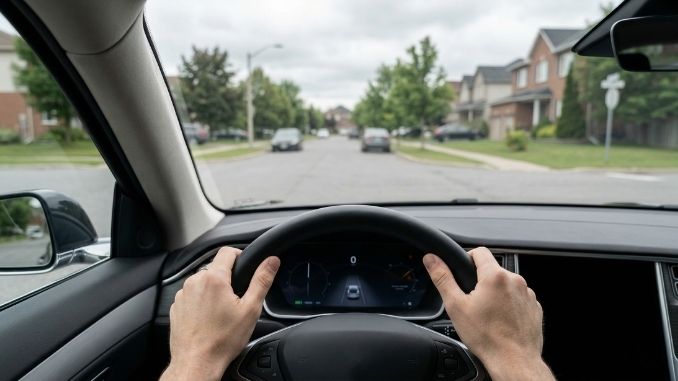
If you plan to drive in Canada, getting a local driver’s license is something you should deal with early.
Depending on your situation, this can be straightforward or surprisingly complicated.
The process depends on:
- which province you live in
- whether you already have a valid license from another country
- whether your license can be exchanged
This guide focuses on what newcomers actually need to know to get on the road quickly.
Driving costs should be factored into your budget:
Last updated: April 2026.
Can You Drive in Canada With a Foreign License?
Yes, but only for a limited time.
Most provinces allow newcomers to drive with a valid foreign license for a short period (typically 60–90 days).
After that:
- you must switch to a provincial license
- or you are no longer legally allowed to drive
Some provinces also recommend or require an International Driving Permit (IDP) alongside your original license.
Option 1: Exchange Your Existing License
If you are from certain countries, you may be able to exchange your license directly without going through the full testing process.
This is the fastest and easiest route.
Countries commonly eligible for exchange agreements include:
- United States
- United Kingdom
- Australia
- Germany
- France
- Japan
- South Korea
The exact list depends on your province.
If your country qualifies:
- you submit your current license
- provide identification and proof of residency
- receive an equivalent Canadian license
In some cases, you may still need an eye test or basic screening.
If you are eligible for an exchange, use it. It saves time, cost, and effort.
Option 2: Go Through the Graduated Licensing System
If your license cannot be exchanged, you will need to go through Canada’s graduated licensing system.
This typically involves:
Step 1: Written Knowledge Test
- basic road rules and signs
Step 2: Learner’s Permit
- restricted driving conditions
- often requires a fully licensed driver in the car
Step 3: Road Test(s)
- one or two practical driving tests depending on the province
In provinces like Ontario, this system is known as G1 → G2 → G.
The full process can take time, especially if you are starting from zero.
Can Your Driving Experience Help?
Yes.
If you have prior driving experience, you may be able to:
- skip certain stages
- book advanced road tests earlier
To do this, you will typically need:
- a driving record or abstract from your home country
- official documentation (sometimes translated)
This is one of the most overlooked steps, and it can significantly speed up the process.
What Documents Do You Need?
While requirements vary slightly by province, you will generally need:
- passport
- immigration documents
- proof of residency
- your existing driver’s license (if applicable)
Having these ready will make the process much smoother.
How Much Does It Cost?
Costs vary by province and by how many tests you need, but expect to pay for:
- knowledge test fees
- road test fees
- license issuance fees
If you need multiple attempts or driving lessons, the cost increases.
Insurance: The Hidden Factor
Getting your license is only part of the equation.
Car insurance in Canada can be expensive, especially for newcomers.
Your driving history (or lack of it) plays a major role in pricing.
If you can provide proof of prior driving experience, it may help reduce your insurance costs.
How This Fits Into Your Setup
Getting your driver’s license is one part of your first few months in Canada.
If you are still working through the basics, start here:
First 10 Things to Do When You Arrive in Canada
You will also need to set up your finances:
Best Bank Accounts for Newcomers to Canada
And begin building your credit profile:
What Newcomers Often Get Wrong
The most common mistakes:
- waiting too long to switch from a foreign license
- not checking if their license can be exchanged
- not bringing proof of driving experience
- underestimating how long the process can take
These are easy to avoid if you plan early.
The Mr. Thrifty Take
If you can exchange your license, the process is simple.
If you cannot, treat it like a timeline-based task and start early.
The biggest mistake is delay.
The second biggest mistake is not bringing the right documentation.
Bottom Line
If you are planning to drive in Canada:
- check if your license can be exchanged
- prepare your documents early
- start the process within your first few weeks
Do that, and you will avoid most of the friction.